
Play The Dog House Megaways Now!
Home → Strategy
The Dog House Megaways Strategy
Approaching The Dog House Megaways sensibly
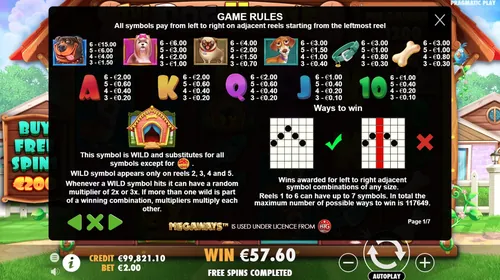
Pragmatic Play developed The Dog House Megaways with a theoretical return to player percentage of 96.55% over extended play sessions. This figure indicates a house edge of 3.45%, meaning the casino retains that portion of all wagers statistically over time. Players must understand this long-term average does not guarantee short-term results or individual session outcomes. The game uses a Megaways engine allowing up to 117,649 ways to win across six reels.
The maximum potential payout in this slot is capped at 12305x the initial stake placed by the user. Such high multipliers are rare and require specific symbol combinations to trigger during the free spins feature. Comparing this to Big Bass Splash reveals a lower cap of 5000x despite similar provider origins. Understanding these limits helps manage expectations regarding the frequency and size of potential wins achieved.
Volatility in The Dog House Megaways is classified as very high, impacting bankroll management strategies significantly. High volatility means wins occur less frequently but tend to be larger when they do happen. This contrasts with lower volatility games that offer smaller, more regular payouts to sustain playtime longer. Beginners should prepare for dry spells between significant winning combinations due to the random nature of the tumble mechanic.
Bankroll rules that hold up
A defined bankroll represents the specific amount of money allocated strictly for playing The Dog House Megaways. Setting aside funds separate from essential living expenses ensures financial stability regardless of game outcomes. For instance, allocating €100 provides a buffer against the inherent variance of very high volatility slots. This separation prevents emotional decision-making when losses accumulate during unlucky streaks experienced by many players.
Flat betting involves wagering the same stake amount on every single spin throughout the entire session. This method conserves bankroll resources longer compared to progressive staking which increases bets after losses. Increasing stakes after deficits does not change the built-in house edge of 3.45% per spin. Instead, it accelerates the depletion of funds and significantly shortens the total time available for gameplay.
The minimum stake required to activate any payline in this slot determines the cost per spin event. Assuming a standard minimum bet structure, calculating total expenditure requires multiplying the stake by the number of spins. For example, one hundred spins at a modest rate consume a predictable fraction of the total bankroll. This calculation allows players to estimate how long their allocated funds will last before requiring replenishment.
Bet sizing against volatility
The reel layout of The Dog House Megaways features six reels with variable row heights ranging from two to seven. This dynamic structure creates up to 117,649 possible ways for matching symbols to appear on consecutive reels. Higher bet sizes amplify both potential losses and gains due to the multiplied value of each winning combination. Adjusting stake levels helps align risk exposure with the player's tolerance for rapid bankroll fluctuations.
Sticky multiplier wilds are central to achieving the maximum win of 12305x in this specific title. These wild symbols remain in place during tumbling sequences, accumulating multipliers that boost final payout values significantly. Larger bets increase the base value upon which these multipliers act, resulting in substantially higher cash prizes. However, the probability of landing these valuable symbols remains constant regardless of the wagered amount per spin.
Comparing stake requirements to Big Bass Splash highlights differences in budget management for similar Pragmatic Play titles. While Big Bass Splash offers a max win of 5000x, The Dog House Megaways reaches 12305x through its unique mechanics. Players targeting the higher ceiling must accept greater variance associated with very high volatility classifications. Careful bet sizing ensures sufficient spins to potentially trigger the free spins round where multipliers become active.
Session limits worth setting
Tumbling or cascading wins replace traditional spinning reels when matching symbols disappear and new ones fall into place. This feature continues until no new winning combinations appear, potentially generating multiple payouts from a single initial spin. Each tumble preserves sticky multiplier wilds, increasing the mathematical expectation of the current sequence outcome. Understanding this mechanic helps players anticipate periods of high activity versus quiet intervals during gameplay sessions.
Free spins with increasing multipliers offer the primary opportunity for substantial returns in The Dog House Megaways. During this bonus phase, multipliers applied to wilds grow progressively larger with each consecutive tumble sequence. Achieving the maximum win of 12305x typically requires landing multiple stacked wilds with high multiplier values. Setting a time limit prevents fatigue-induced errors while navigating these complex and visually stimulating bonus rounds.
The theoretical return of 96.55% applies only over hundreds of thousands of spins, not single gaming sessions. Short-term results can deviate significantly from this average due to the influence of random number generation algorithms. Players often experience winning streaks or losing droughts that temporarily mask the true statistical edge held by the casino. Recognizing this variance encourages disciplined adherence to pre-set loss limits rather than chasing perceived hot or cold streaks.
Why chasing losses fails
Progressive staking involves raising the wager amount immediately following a losing spin in an attempt to recover funds. This strategy assumes that a win is imminent and will cover previous deficits plus generate a profit. However, the independent nature of each spin means past outcomes have zero influence on future results. The house edge of 3.45% remains unchanged regardless of the stake size increased by the player.
Very high volatility in The Dog House Megaways exacerbates the dangers of increasing bets after losses. Extended periods without significant wins are common, draining bankrolls rapidly when stakes are artificially inflated. For example, doubling bets after five consecutive losses quickly consumes a small initial deposit like €50. This approach drastically reduces the number of spins available, eliminating any chance of hitting a large payout later.
Big Bass Splash also features high volatility but caps its maximum win at 5000x compared to 12305x here. Both titles rely on random outcomes where no betting system can alter the underlying probability distribution. Attempting to force a recovery through aggressive wagering ignores the mathematical reality of negative expected value. Sustainable play requires accepting losses as part of the entertainment cost rather than viewing them as debts to be repaid.
The Dog House Megaways: key facts
| Parameter | Value |
|---|---|
| Game | The Dog House Megaways |
| Studio | Pragmatic Play |
| RTP | 96.55% |
| House edge | 3.45% |
| Volatility | very high |
| Max win | 12305x |
| Reels | 6 reels, 2-7 rows |
| Paylines / ways | up to 117,649 ways |
Common systems and their limits
The Dog House Megaways from Pragmatic Play utilizes a reel layout of 6 reels with 2 to 7 rows, creating up to 117,649 ways to win on any given spin. This massive grid structure significantly increases the frequency of small payouts compared to standard 5-reel slots, providing more frequent feedback during gameplay sessions. However, the very high volatility means these wins are often offset by long dry spells without significant returns. Players should expect extended periods of zero or minimal wins before hitting larger combinations.
In contrast, Zeus vs Hades by the same developer operates on a fixed 5x5 grid with only 243 ways to win. This simpler structure results in a lower maximum win cap of 15000x compared to the 12305x limit found in The Dog House Megaways. The difference in grid size directly impacts the variance profile, making Zeus vs Hades slightly less erratic than its canine-themed counterpart. Understanding these structural differences helps players choose games that match their risk tolerance levels.
The theoretical return to player (RTP) for The Dog House Megaways stands at 96.55%, establishing a house edge of 3.45% over millions of spins. This percentage represents a long-run average and does not guarantee short-term profitability for individual gaming sessions. Many beginners mistakenly believe that higher volatility guarantees bigger wins, but it actually increases the likelihood of rapid bankroll depletion. Proper bankroll management remains essential regardless of the specific mathematical model employed by the game provider.
Flat betting explained
Flat betting involves wagering the same stake amount on every single spin throughout an entire gaming session, regardless of previous outcomes. For The Dog House Megaways, this strategy helps players manage their bankroll more predictably by avoiding sudden large losses after winning streaks. Since the game features very high volatility, maintaining consistent bet sizes prevents emotional decision-making during dry spells or bonus triggers. This approach is particularly useful for beginners learning to navigate complex slot mechanics without overwhelming themselves financially.
The maximum potential payout for this slot reaches 12305x the total bet, which can result in substantial returns even with modest wagers. A flat bet of 1€ could theoretically yield a maximum win of 12305€, demonstrating the power of the sticky multiplier wilds feature. However, achieving this top prize requires landing multiple wild symbols with increasing multipliers during the free spins round. Beginners should remember that such extreme outcomes are statistically rare and should not influence daily betting decisions.
Unlike progressive staking methods, flat betting does not alter the built-in house edge of 3.45% inherent in the game design. Raising stakes after losses merely shortens the time to ruin without improving the expected value of each individual spin. By keeping bets constant, players can better track their actual spending versus winnings over extended play periods. This transparency allows for more accurate assessment of personal gambling habits and financial limits when engaging with high-variance titles like The Dog House Megaways.
Progressive staking risks
Progressive staking involves systematically raising the bet size after each loss, aiming to recover previous deficits through subsequent wins. This method fundamentally misunderstands how random number generators work within The Dog House Megaways, where each spin remains independent of prior results. Since the game maintains a fixed RTP of 96.55%, no betting pattern can overcome the mathematical advantage held by the casino operator. Implementing such strategies typically accelerates bankroll exhaustion rather than preventing it during challenging playing sessions.
The tumbling wins feature in The Dog House Megaways replaces losing symbols with new ones, potentially creating multiple consecutive wins from a single bet. While this mechanic might tempt players to increase stakes following successful cascades, it does not change the underlying probability distribution of future outcomes. Each tumble represents a separate event governed by the same 3.45% house edge established at the game's development stage. Believing that recent wins predict future success leads to dangerous overconfidence and irresponsible wagering behavior among inexperienced users.
Zeus vs Hades offers a different experience with its high volatility and 15000x max win potential, yet still suffers from identical progressive staking fallacies. No amount of strategic bet adjustment can convert a negative expectation game into a profitable venture over the long term. The 117,649 ways to win in The Dog House Megaways provide numerous opportunities for small payouts, but these do not justify escalating wagers after losses. Responsible gambling guidelines universally advise against using progression systems due to their inevitable failure against mathematically designed slot machines.
What the maths actually allows
The Megaways engine powers The Dog House Megaways to generate up to 117,649 ways to win across its six-reel configuration. This dynamic reel setup creates varying symbol counts per spin, directly influencing the hit frequency and overall payout patterns experienced by players. With a theoretical RTP of 96.55%, the game returns €96.55 for every €100 wagered over hundreds of thousands of spins. This statistical certainty provides a baseline for understanding expected losses during typical gaming sessions involving multiple rounds.
Sticky multiplier wilds serve as the primary mechanism for generating significant payouts within the base game and free spins features. These special symbols remain in place during tumbling sequences, allowing multipliers to accumulate and create exponential growth in potential winnings. The combination of cascading wins and persistent multipliers explains why the maximum win reaches 12305x the initial stake despite the high volatility rating. Such features require precise alignment of symbols to trigger, making large wins rare events rather than common occurrences.
Comparing this to Zeus vs Hades reveals how different volatility profiles affect player expectations despite similar developer origins. While both titles share Pragmatic Play branding, their distinct mathematical models produce vastly different gaming experiences regarding risk and reward. The 5x5 grid structure of Zeus vs Hades contrasts sharply with the expansive 6-reel format of The Dog House Megaways. These structural differences directly impact how quickly bankrolls deplete or grow during extended play sessions requiring careful monitoring.
Reading variance honestly
Very high volatility defines the core experience of The Dog House Megaways, meaning wins occur infrequently but tend to be substantial when they happen. This characteristic demands substantial bankroll reserves to withstand extended periods without significant returns during regular gameplay sessions. The 96.55% RTP ensures that while individual sessions vary wildly, long-term results align closely with the theoretical expectation over millions of spins. Beginners must recognize that patience and financial preparation are essential prerequisites for enjoying this particular type of slot machine effectively.
The free spins feature introduces increasing multipliers that can dramatically amplify payouts during triggered bonus rounds within the game structure. Landing three scatter symbols awards the initial free spins round, where subsequent wilds carry progressively higher multiplier values. This mechanic contributes significantly to the 12305x maximum win potential achievable through optimal symbol alignment during bonus phases. Understanding how these multipliers stack helps players appreciate why variance remains so pronounced compared to lower-volatility alternatives available from other providers.
Zeus vs Hades demonstrates how alternative volatility settings create different pacing experiences despite sharing similar thematic elements and developer characteristics. Its high volatility rating produces fewer but larger wins compared to the extremely volatile nature of The Dog House Megaways. The 15000x max win cap offers slightly higher ceiling potential than the 12305x limit found in the canine-themed title. Comparing these extremes helps players understand why variance matters more than raw RTP figures when selecting appropriate games for their specific risk preferences and budget constraints.
Learning the game in demo first
The developer Pragmatic Play built The Dog House Megaways with a reel layout of 6 reels and 2 to 7 rows, allowing up to 117,649 ways to win through its proprietary engine. This complex structure requires players to understand how tumbling wins trigger before risking real funds. Practicing in free mode reveals that sticky multiplier wilds accumulate during cascades without financial loss.
Players can test the volatility mechanics safely because no real money changes hands during the simulation phase. A single spin might yield zero returns or trigger the free spins round where multipliers increase significantly. This pattern demonstrates why understanding the hit frequency is essential for long-term bankroll management.
Comparing this layout to Sweet Bonanza Super Scatter highlights different risk profiles despite both using a 6x5 grid. Sweet Bonanza offers a max win of 50000x while The Dog House Megaways caps at 12305x. Such differences dictate whether a player prefers high-variance swings or more frequent smaller payouts.
Adjusting stakes to your budget
The theoretical return to player stands at 96.55%, meaning the house edge remains fixed at 3.45% regardless of stake size. A flat betting strategy involves wagering the same amount per spin to maintain control over expenditure rates. This approach prevents rapid depletion of the bankroll during inevitable losing streaks inherent to very high volatility slots.
Progressive staking systems involve raising stakes after losses, which does not change the built-in edge and only shortens the time to ruin. Increasing bet sizes on a game with 12305x max win potential creates dangerous variance exposure for small accounts. Maintaining a consistent stake ensures the session duration aligns with the available budget limits.
A €100 bankroll allows approximately 2,857 spins at a €0.35 base stake, considering the 3.45% house edge. Dividing the total balance by the average cost per spin provides a realistic estimate of playtime availability. This calculation helps players set strict limits before activating the tumble feature or wild symbols.
Recognising a bad session
Very high volatility indicates that wins occur infrequently but carry larger potential values, leading to extended dry spells. Players should monitor their remaining balance relative to the initial deposit to detect negative trends early. If the bankroll drops below 50% within the first hour, continuing play statistically increases the likelihood of total loss.
The maximum win cap of 12305x sets a hard limit on potential payouts, capping any single session's upside. Chasing losses after hitting this ceiling ignores the mathematical reality that the house edge persists across all spins. Recognizing when to stop preserves capital for future sessions where the law of large numbers may favor the player.
Tracking the number of consecutive non-winning spins helps identify if the random number generator is producing unfavorable sequences. Experiencing fifty empty tumbles suggests the current variance cycle is deeply negative compared to the RTP baseline. Exiting during such periods avoids compounding errors driven by emotional decision-making rather than statistical probability.
Stopping while ahead
A successful outcome occurs when the final balance exceeds the starting bankroll after accounting for all wagers placed. Locking in profits by withdrawing funds secures gains against the inevitable erosion caused by the 3.45% house edge. This practice transforms virtual winnings into actual monetary value independent of future spin outcomes.
Withdrawing half of any profit ensures that the original investment remains protected while letting the remainder ride. For instance, doubling a €50 stake to €100 allows a €50 withdrawal, leaving €50 at risk for further features. This methodical approach maintains discipline during the sticky multiplier wilds accumulation phase in free spins.
Setting a target win amount before playing prevents greed from overriding rational financial planning during high-variance rounds. Reaching a predetermined goal triggers an automatic exit strategy, avoiding the temptation to reinvest winnings into higher stakes. This habit reinforces responsible gambling principles by separating entertainment costs from income generation attempts.
Responsible play in practice
Bankroll management requires setting aside a specific sum of money designated solely for recreational gaming activities. This allocation must be distinct from essential living expenses to ensure financial stability remains intact during play. Adhering to these limits prevents gambling from becoming a source of economic hardship or stress.
Time limits complement financial boundaries by restricting the duration of each gaming session to prevent fatigue-induced errors. Playing The Dog House Megaways for more than two hours continuously often leads to diminished concentration and poor decisions. Scheduling regular breaks helps maintain objective assessment of the game's volatile nature and payout structures.
Utilizing self-exclusion tools provided by operators offers a technical safeguard against impulsive behavior during losing streaks. These mechanisms enforce mandatory cooling-off periods that interrupt the cycle of chasing losses or rebuying credits. Responsible engagement with slots like this one prioritizes long-term sustainability over short-term thrill-seeking impulses.
DemoRTP & VolatilitySymbols & PayoutsBonus FeaturesStrategyBonusesMobileDownload & AppMax WinSimilar GamesReviewFAQSitemap
The Dog House Megaways 2026